

Care at Crystal Dental
Root Canal Treatment
An assessment of your tooth and a clear explanation of treatment options, with a focus on preserving your natural smile.
Treat the problem, save the tooth.
What is root canal treatment?
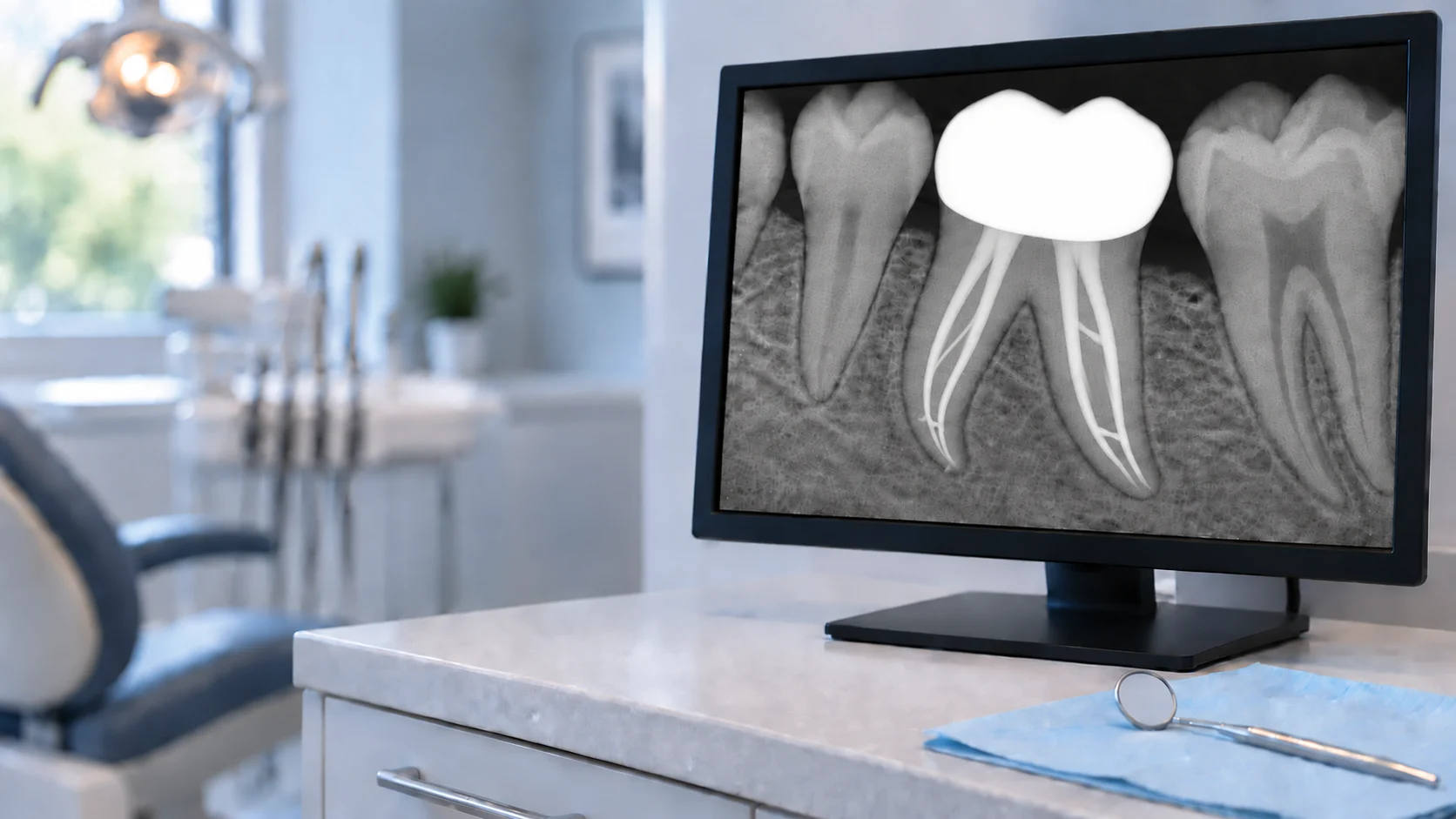
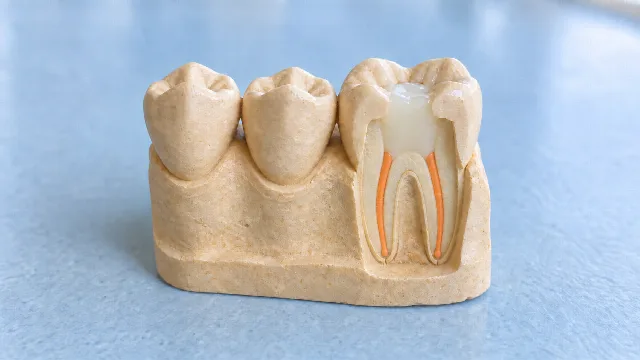
Root canal treatment removes inflamed or infected tissue from inside a tooth so that it can often be kept rather than removed. This tissue, called the pulp, contains nerves and blood vessels and extends from a central chamber inside the tooth into narrow canals within the roots. Deep decay, a crack or trauma to the tooth can injure the pulp, sometimes causing lingering sensitivity, pain or swelling.
After numbing the area, your dentist makes an opening in the tooth, removes the affected pulp, and cleans, fills and seals the root canals. A fully developed tooth can continue to function without its pulp because the tissues around its roots still provide support and nourishment. We also plan the final filling or crown to seal the opening and help protect the remaining tooth during chewing.
Understanding your symptoms
When a root canal may be needed
These symptoms can have more than one cause. Your dentist examines and tests the tooth, and reviews X-rays, to confirm the diagnosis and check whether the tooth can be restored.
- Pain when biting or sensitivity to hot or cold that lingers.
- Pain that wakes you up at night.
- Deep decay, a crack, or an injury affecting the inside of the tooth.
- Swelling or a recurring bump on the gum beside a tooth.
A closer look
Choosing care for your tooth
Root canal treatment and restoration
If the tooth has enough remaining structure and support, a root canal followed by a suitable restoration may allow you to keep it. Your dentist explains the expected benefits and limitations.
When another approach is needed
A previously root canal treated tooth may need further assessment or retreatment. If a tooth cannot be restored, removal may be recommended. We explain the alternatives and any plans for replacing the tooth, including whether dental implants may be suitable.
What to expect
What to expect, step by step.
01
Understand the plan
We explain what is happening inside the tooth, the treatment options, and the expected appointments. If specialist care is recommended, we discuss a referral to an endodontist, a dentist who specializes in root canal treatment.
02
Clean and seal the canals
Local anaesthetic numbs the area. Your dentist removes the affected pulp, cleans and shapes the canals, then fills and seals them. A temporary filling may protect the tooth between appointments.
03
Restore and protect the tooth
A final filling or crown completes the repair. A crown is often recommended for a back tooth that bears chewing forces or a tooth with a large restoration, to help protect it. We explain how to care for the tooth while it is being restored and arrange any follow-up needed to check healing.
The Crystal Dental approach
Why choose Crystal Dental for root canal treatment?
Know what to expect
We explain the diagnosis, the treatment sequence, and why the final restoration matters.
Room for your concerns
Questions about comfort or appointments are welcome. Let us know how you are feeling so we can support you during the visit.
A plan through completion
Your care includes the next steps for restoring the tooth and advice for looking after it at home.
Your care team
Four doctors. One family approach.

Dr. Bogdan Stanisavljevic
B.Sc., DMD

Dr. Goran Stanisavljevic
DMD, M.Sc., PhD · Co-founder

Dr. Dragana Stanisavljevic
DMD · Co-founder

Dr. Nicole Stanisavljevic
B.Sc. (Honours), DMD
FAQs
Root Canal Treatment: your questions.
Have another question? Contact our team and we will be happy to help.
Will root canal treatment hurt?
Typically, no. Local anaesthetic is used to numb the area so that you are comfortable during treatment. Some tenderness afterwards is possible, and we will explain how to manage it.
Can root canal treatment save a cracked or fractured tooth?
Sometimes. If a crack has affected the tissue inside a tooth that can still be restored, root canal treatment may help save it, usually followed by a protective crown. Root canal treatment does not repair the crack itself, and some deep fractures cannot be treated this way. Your dentist will assess the crack and explain the options.
How many visits will I need?
Treatment may take one or more visits, depending on the tooth and the complexity of the problem. The final filling or crown may need a separate appointment. We explain the sequence before treatment begins.
Will I need a crown after a root canal?
Typically, yes. A crown is often recommended for back teeth that bear chewing forces or teeth with large fillings. The decision depends on the tooth and how much healthy structure remains. Some teeth can be restored with a filling only.
When can I eat afterwards?
Wait until the numbness has worn off before eating. Avoid hard foods and heavy biting on the treated tooth until it has been fully restored and your dentist says it is ready.
Can the tooth need treatment again?
Yes. New decay, a crack, or a loose restoration can create further problems. Brush and clean between your teeth daily, attend checkups, and report any new pain or swelling.
When should I contact the practice?
Contact us if pain is severe or worsening, swelling develops, your bite feels uneven, symptoms return, or the temporary filling or crown comes out. We can assess the tooth and advise you on the next step.
How do I book, and can I ask about costs first?
Choose Burnaby or Langley on our Contact page and call, email, or text the office to arrange a visit. Our reception team will confirm your appointment. Ask about estimates and bring your current benefit information; see our insurance and payment page for more details.
Further reading: American Association of Endodontists — What Is a Root Canal? · NHS — Root Canal Treatment · American Association of Endodontists — Post Treatment Care · American Association of Endodontists — Root Canal Explained · American Association of Endodontists — Cracked Teeth
Your next visit
Let’s make time for your smile.
Choose the office that works for you. Our reception team will help arrange your appointment.