

Care at Crystal Dental
Dental Crowns & Bridges
Thoughtful options for damaged or missing teeth, with your comfort and everyday function in mind.
Restore a damaged tooth or fill a gap.
What are dental crowns and bridges?
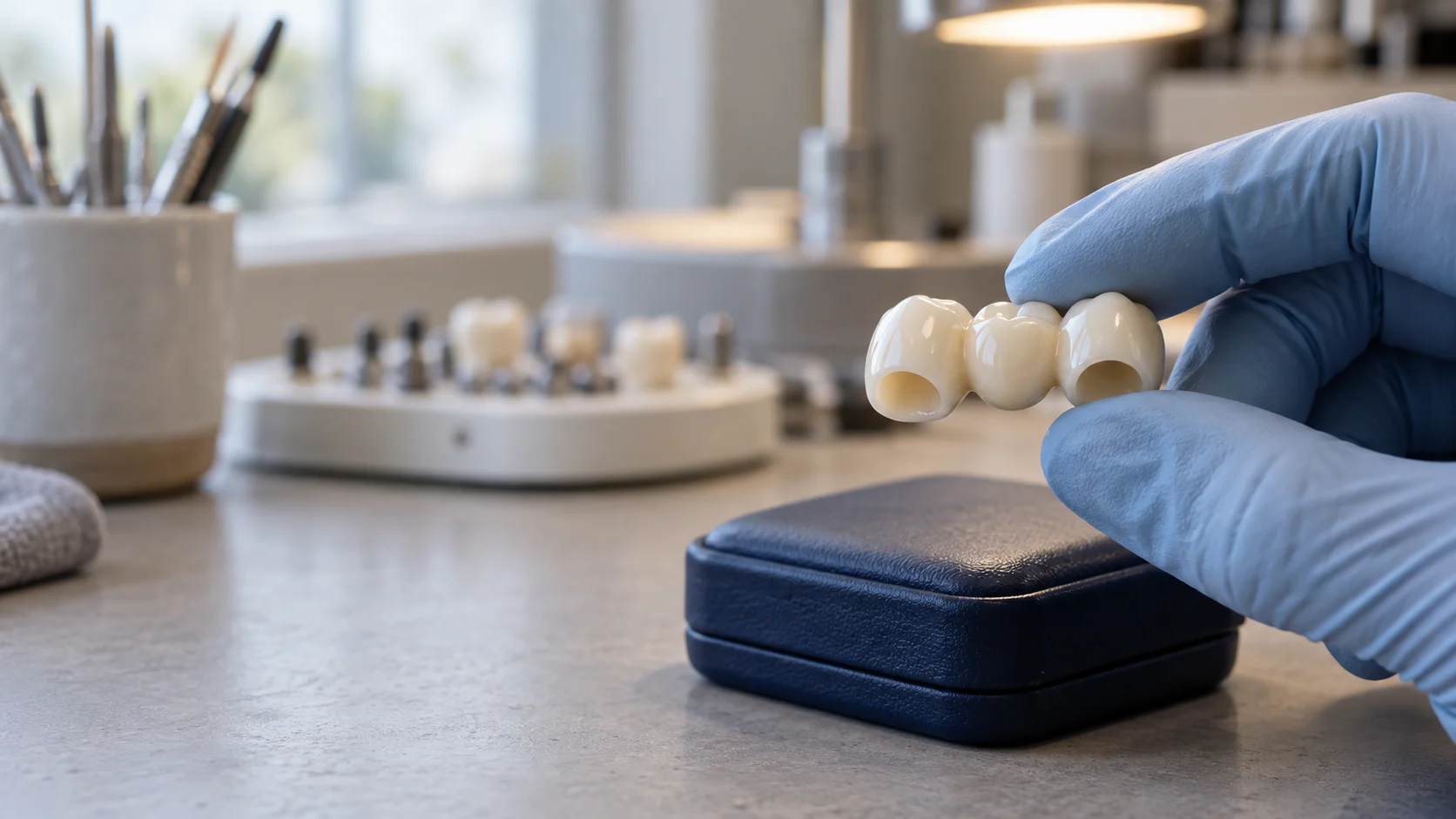
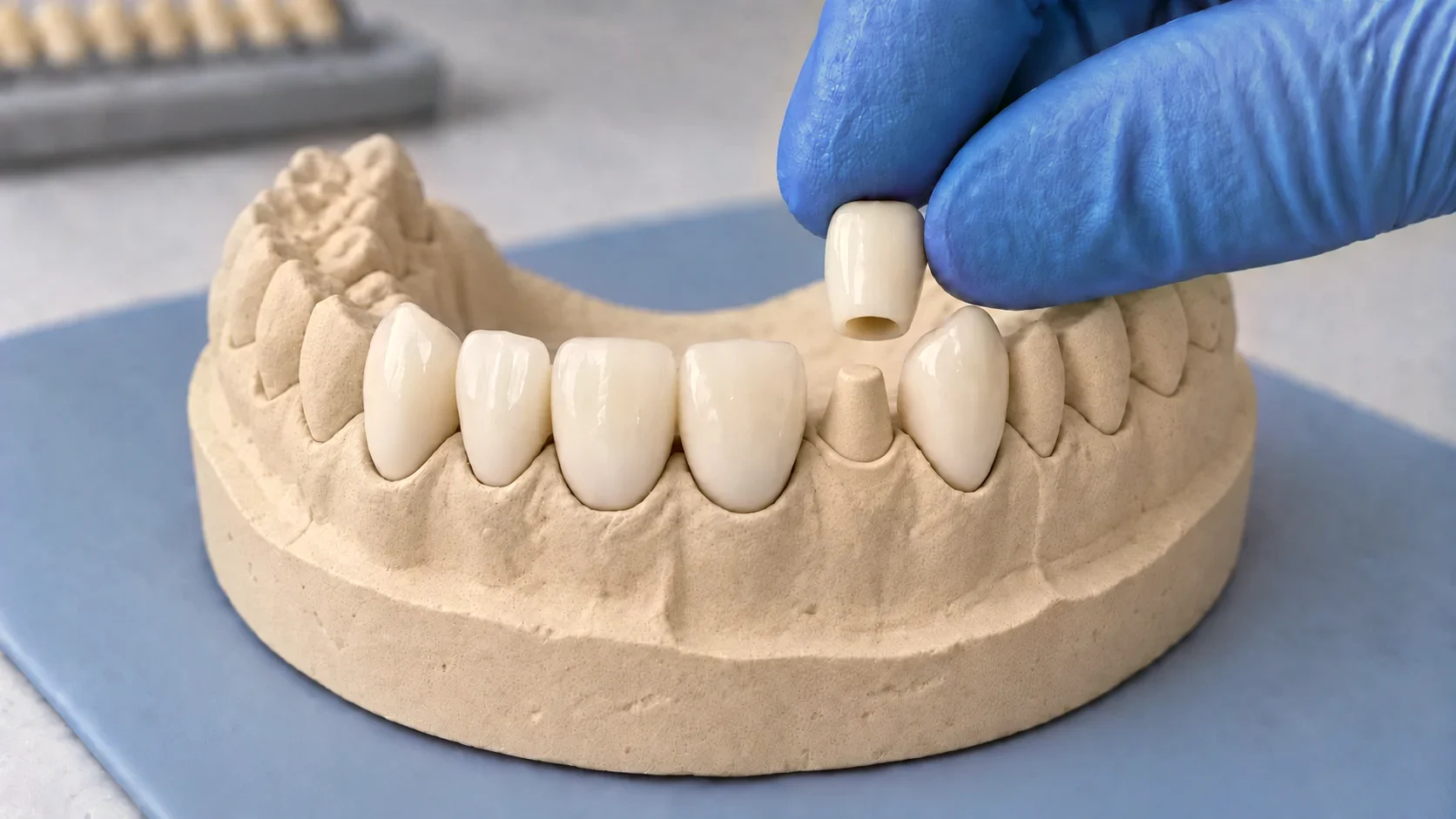
A dental crown is a custom-made cap that fits over the visible part of a tooth, restoring its shape and helping protect weakened tooth structure. It may be recommended when a large filling, fracture or root canal treatment has left the tooth needing more coverage than a filling can provide. A bridge replaces one or more missing teeth, with the replacement tooth held in place by neighbouring teeth or dental implants.
Both are fixed restorations, meaning they stay in your mouth rather than being taken out for meals or cleaning. For a tooth-supported crown or bridge, the supporting teeth are shaped as needed and impressions or scans guide the laboratory in making a restoration that fits your bite. Daily cleaning remains important because the supporting teeth and gums still need care, including cleaning beneath a bridge’s replacement tooth.
Restoring your smile
When a crown or bridge can help
Your dentist checks the remaining tooth structure, gums, and bite. For a bridge, we also assess the teeth or implants that would support the replacement.
- A broken or weakened tooth needs more support than a filling can provide.
- A tooth needs protection after root canal treatment.
- A missing tooth or teeth leave a gap you would like to restore.
A closer look
Materials for your crown or bridge

Zirconia and other ceramics
Ceramics offer a tooth-coloured appearance, and some provide translucency similar to natural enamel. Different types balance appearance and strength differently, so the position of the tooth, your bite, and the restoration’s design guide the recommendation.

Porcelain fused to metal
A strong metal core supports an outer layer of tooth-coloured porcelain, combining durability with a natural appearance. This combination may suit crowns or bridges that need the support of a metal framework.

Metal alloys
Metal crowns, including gold alloys, can be a durable option for back teeth where appearance is less of a concern. Your dentist can explain the advantages and limitations for your tooth.
What to expect
What to expect, step by step.
01
Plan the restoration
We examine the area and discuss your options. Your dentist explains the recommended material. If you need a bridge, we also explain how it will be supported and whether neighbouring teeth need preparation.
02
Prepare the tooth or teeth
The supporting teeth are shaped as needed, with local anaesthetic for comfort. Impressions record the area for your custom restoration. A temporary crown or bridge protects the prepared teeth while the laboratory makes the final restoration.
03
Fit and check
At the fitting visit, your dentist checks the appearance, fit, and bite before securing the restoration. We show you how to clean around it and explain how regular checkups help maintain it.
The Crystal Dental approach
Why choose Crystal Dental for dental crowns & bridges?
Choices made clear
We explain the difference between a crown and a bridge, and how each proposed option would work for you.
Attention to fit and appearance
Your bite and the surrounding teeth guide the shape, shade, and fit of your restoration.
Care for the years ahead
We explain cleaning techniques and follow-up care to help you look after the restoration and the teeth supporting it.
Your care team
Four doctors. One family approach.

Dr. Bogdan Stanisavljevic
B.Sc., DMD

Dr. Goran Stanisavljevic
DMD, M.Sc., PhD · Co-founder

Dr. Dragana Stanisavljevic
DMD · Co-founder

Dr. Nicole Stanisavljevic
B.Sc. (Honours), DMD
FAQs
Dental Crowns & Bridges: your questions.
Have another question? Contact our team and we will be happy to help.
What is the difference between a crown and a bridge?
A crown covers an existing tooth (like a helmet), whereas a bridge spans a gap to replace missing teeth. A traditional bridge uses crowns on neighbouring teeth to hold the replacement tooth in place.
Can a crown help protect a cracked tooth?
A crown can cover and support a weakened tooth, helping reduce the chance of further damage. Whether it is suitable depends on the location and extent of the crack and the condition of the remaining tooth. Some teeth also need root canal treatment. A crown cannot make a crack heal or guarantee that it will not progress.
Can I have a filling instead of a crown?
A crown is generally recommended when a tooth has lost substantial structure, has a large existing filling with limited remaining tooth structure or needs added protection against fracture. In these situations, a filling alone may not provide the protection needed to prevent a fracture (and potential loss of the tooth). Your dentist will explain the suitable options and why one may offer better support for your tooth.
Will a bridge affect the teeth beside the gap?
A traditional bridge usually requires those teeth to be shaped for supporting crowns. Other bridge designs or a dental implant may be options in selected cases. We discuss this before preparing any teeth.
How many appointments will I need?
Crowns and bridges commonly involve a preparation visit and a later fitting visit. A temporary restoration may be used between them. Any other treatment the teeth or gums need can affect the schedule.
Which material is best?
There is no single best material for every restoration. Your dentist considers strength, appearance, the available space, and your bite, then explains the suitable choices. If you have concerns about specific alloys, known metal allergies, or material preferences, discuss them with your dentist at your consultation.
How do I clean a crown or bridge?
Brush twice a day and clean between your teeth daily. A bridge also needs cleaning beneath the replacement tooth. A floss threader or another cleaning aid can help; ask us to show you a technique that suits your restoration.
How long will it last?
Crowns and bridges can last for many years with daily care and regular checkups. Their lifespan depends on several factors, including your bite, the health of the supporting teeth and gums, and the condition of the teeth before receiving the crown or bridge. Contact us if a restoration chips, loosens, or becomes uncomfortable.
How do I book, and can I ask about costs first?
Choose Burnaby or Langley on our Contact page and call, email, or text the office to arrange a visit. Our reception team will confirm your appointment. Ask about estimates and bring your current benefit information; see our insurance and payment page for more details.
Further reading: Canadian Dental Association — Crowns · Canadian Dental Association — Bridges · American Dental Association — Materials for Indirect Restorations · ADA MouthHealthy — Crowns · University Hospitals of North Midlands NHS Trust — Crowns and Bridges · American Association of Endodontists — Cracked Teeth
Your next visit
Let’s make time for your smile.
Choose the office that works for you. Our reception team will help arrange your appointment.